IOT & EMBEDDED ENGINEER · SENIOR QA AT IDEMIA · JAKARTA
I test smart cards. I build the devices around them.
Five years of making sure hardware and software actually work — first by building it, then by testing it, now by doing both. I'm looking for my next role in IoT, firmware or embedded engineering — and QA that stays close to the hardware.
Hello, I'm Ega.
I'm a Senior QA Engineer at IDEMIA, where I validate SIM, eSIM and IoT connectivity from the first personalization command to a live 5G network and back.
I started as an electrical engineer, designing radar electronics and 3D-printer hardware. Testing taught me to think about everything that can go wrong; building taught me how to fix it. Now I write the tools my QA team uses daily, and the freelance IoT systems I led are still running in the real world.
B.Eng Electrical Engineering, Universitas Padjadjaran · ISTQB Certified Tester (CTFL)
Two toolkits, one engineer
What I bring depends on the team — but both halves make the other stronger.
For IoT & embedded teams
Hardware, firmware and connectivity
- C / C++ · ESP32 & ESP-IDF · FreeRTOS
- Raspberry Pi · BLE · MQTT · LVGL
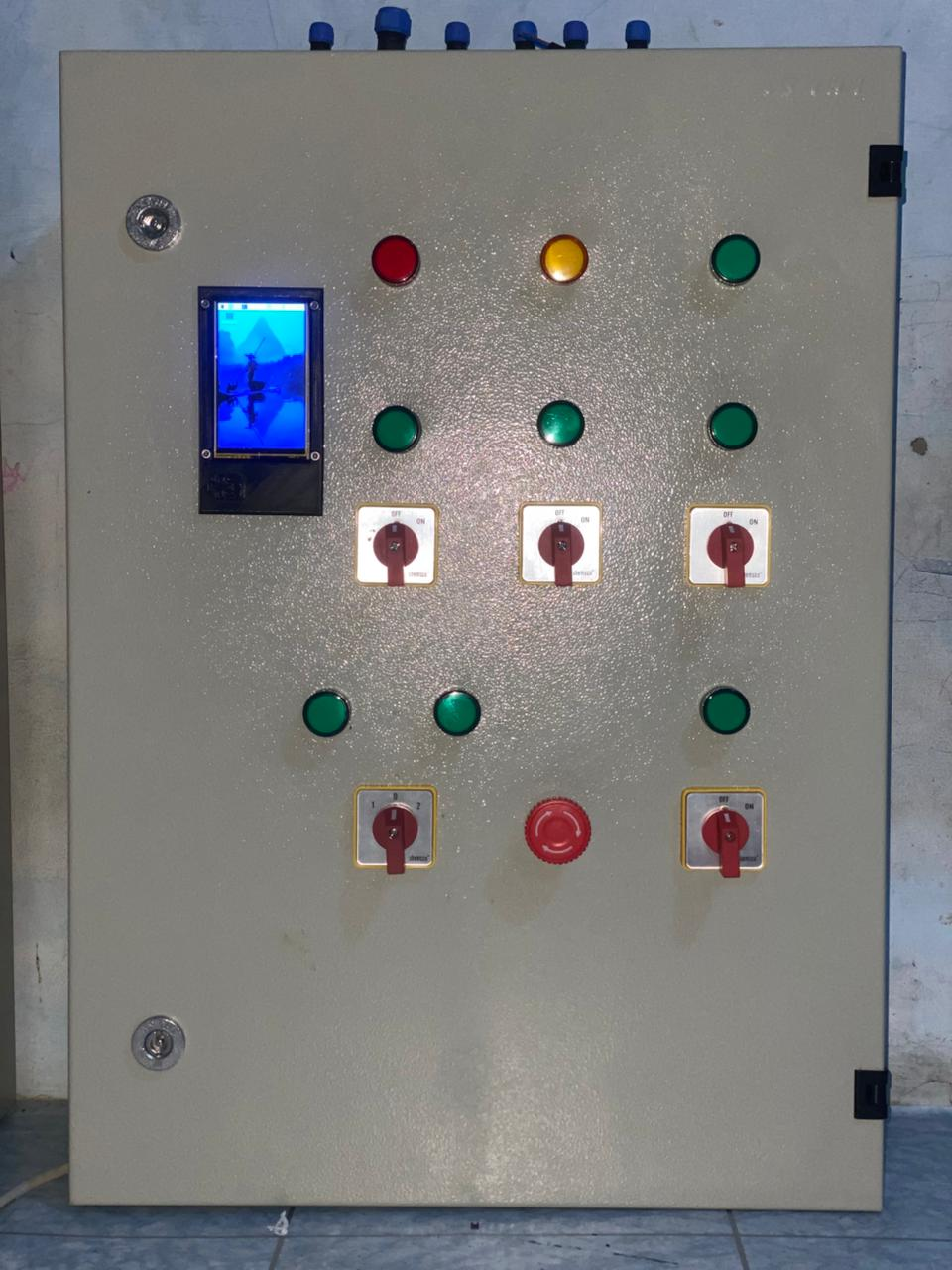
- PCB design, control panels, wiring
- 3G / 4G / 5G · OTA SMS-PP · eSIM SM-DP/SM-SR
- Quectel, u-blox, Rolling Wireless and nRF modem integration
- UART · SPI · I²C · RS-485 · custom binary protocols
For QA teams
Quality, process and test automation
- End-to-end UICC / eUICC testing
- Test design, regression & ATD/ATR reports
- Jira / Xray · Scrum & Kanban
- APDU & SIM trace analysis · COMPRION
- Python automation · Flask, Django, Streamlit · Docker, Jenkins
The journey so far
Employment
Freelance, alongside the day job
Each role opens into the full detail — the same depth as my LinkedIn, without the scroll.
2022
Nov 2022 – Present
FULL-TIME
CHAPTER 3 · TESTING AT SCALE
IDEMIA
Senior QA Engineer (QA 2), Mar 2026 – now · QA Engineer (QA 1), Nov 2022 – Mar 2026
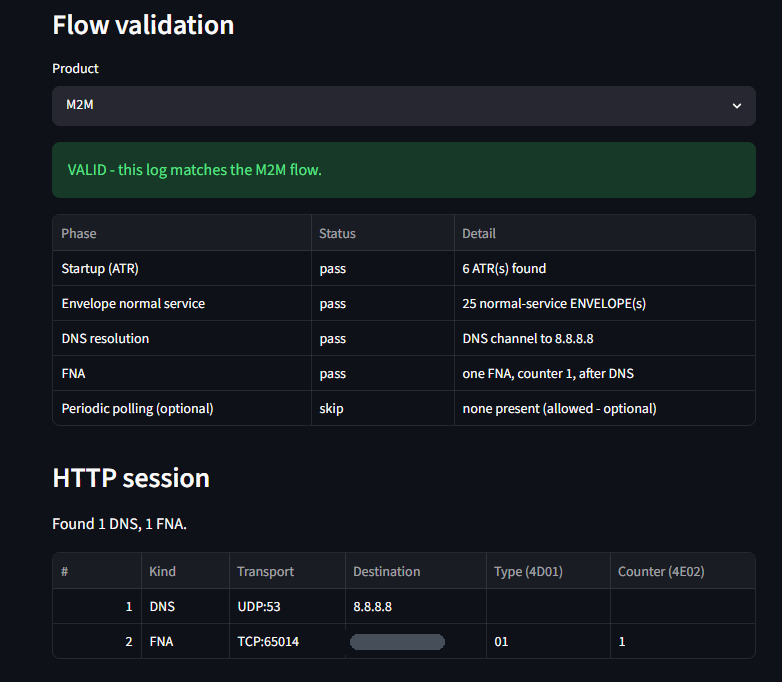
I joined to test SIM cards and found a job that touches everything: personalization, APDU validation, live 3G/4G/5G attach, OTA updates and eSIM lifecycle on SM-DP/SM-SR. As a senior I lead validation of eUICC, iSIM and IoT products.
- Built a 24-hour NVM endurance automation that made overnight testing possible — now used in about 90% of NVM projects.
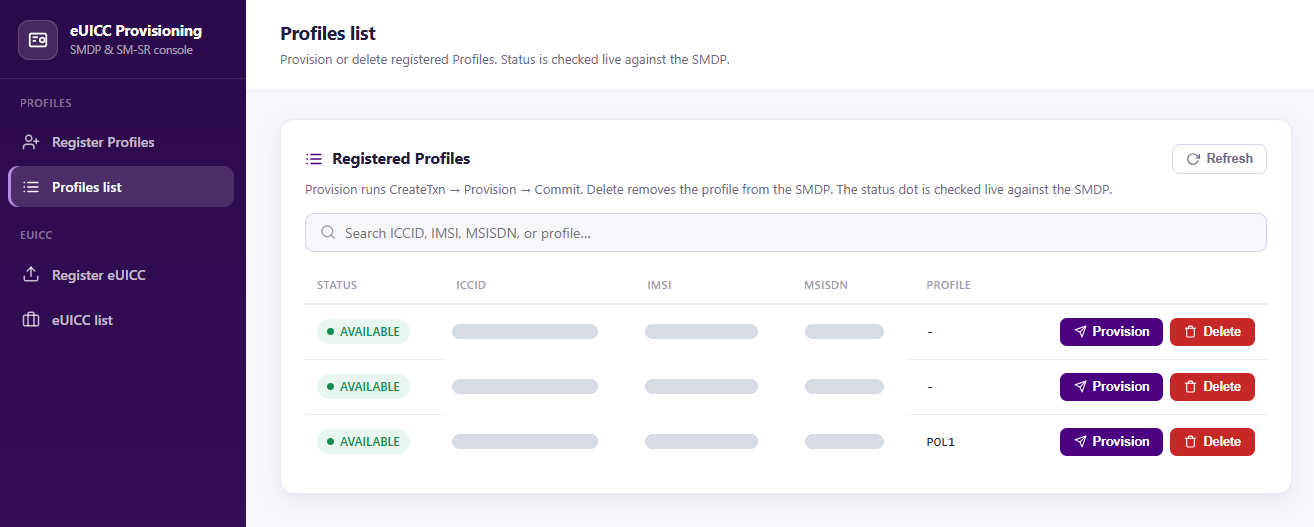
- Replaced manual workflows with OBTANA Web, the eUICC Provisioning Tool and the NVM Script Editor, turning up to three days of preparation into minutes.
- Point of contact and trainer for interns across two intakes, and support for IDEMIA teams in Noida, France and Manila.
▶Full detail — what the role actually involved
Validation & test execution
- Validate UICC/eUICC (SIM/eSIM) card OS and applets end to end on live 3G, 4G, 5G and NB-IoT networks for international mobile operators, down to APDU level with COMPRION tooling.
- Run feasibility studies against 3GPP, ISO 7816, ETSI and GSMA SGP specifications, and decide what a product can and cannot be asked to do before the test plan is written.
- Test eSIM remote provisioning against live SM-DP/SM-SR platforms (GSMA RSP), including profile download, enable/disable, and recovery from states the card and the platform disagree about.
- Bring up test devices on Quectel, u-blox, Rolling Wireless and Nordic modules over AT commands, and analyse SIM traces and APDU exchanges when a failure is not where the log says it is.
- As a senior, lead validation of the non-conventional products — eUICC, iSIM and IoT — where there is no existing test set to inherit.
Planning, reporting & process
- Design and maintain test cases in Jira/Xray, plan the execution, and author the ATD and ATR documents that release a product.
- Run regression across applet versions, card OS releases and modem configurations, and keep the test set honest — trimming coverage that no longer earns its runtime.
- Work in Scrum and Kanban with the development and project teams, and report status to the people who decide whether a product ships.
Tooling & automation
- NVM endurance automation — Python over AT commands running unattended 24-hour cycles on 5G modems, so engineers collect logs the next morning instead of sitting with the bench. Now used on roughly 90% of NVM projects.
- eUICC Provisioning Tool — the team's main tool for eUICC projects. Cuts stuck-ICCID recovery from six manual steps across two tools to a few clicks (Django, PostgreSQL, corporate LDAP, Jenkins, Docker).
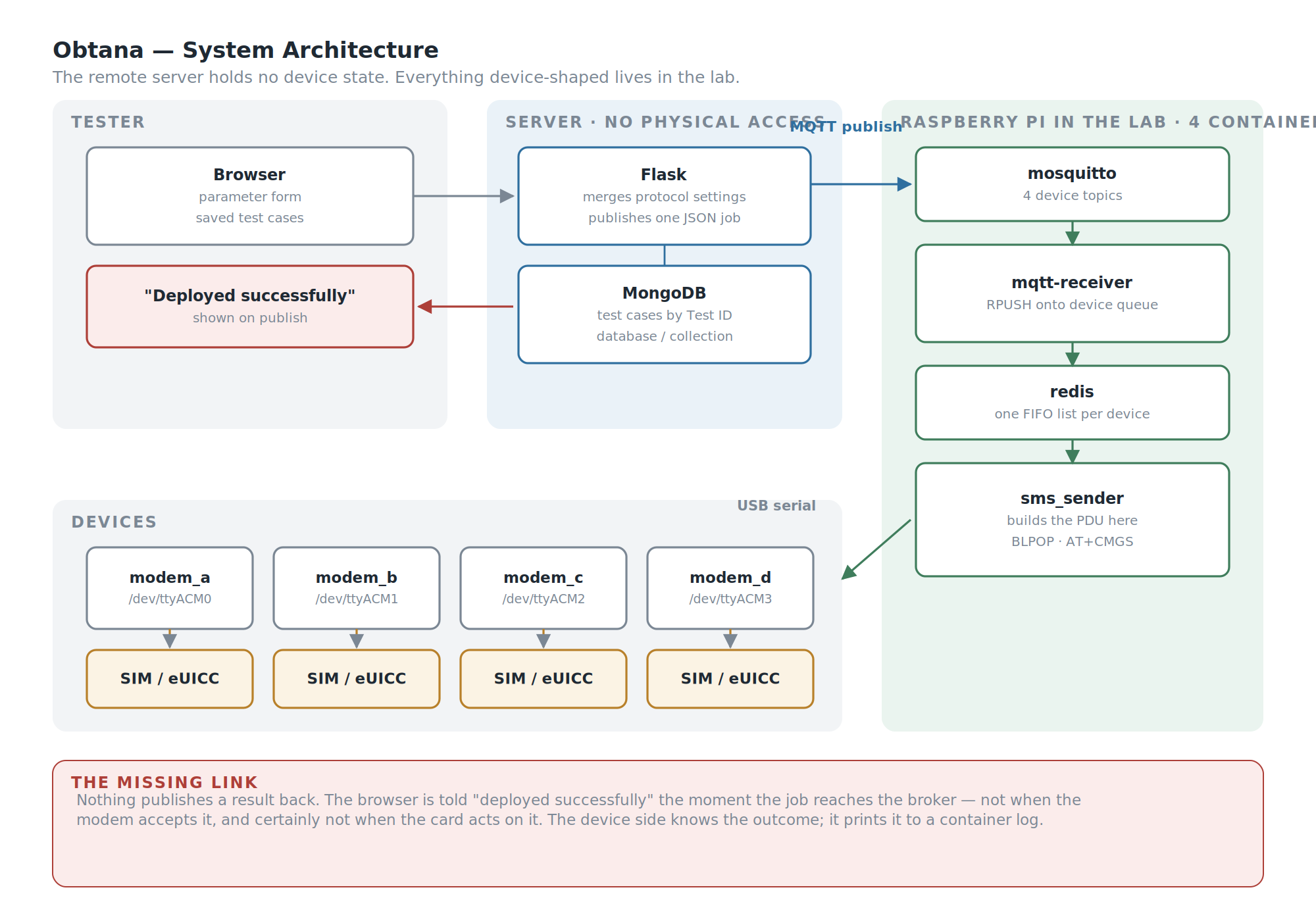
- OBTANA, OTA test platform — pooled the shared 2G test handsets behind a browser tab (Flask, MQTT, Redis, Raspberry Pi), removing the fragile local Python setup every tester used to maintain.
- NVM Script Editor and Validator — converts COMPRION trace logs into DLL-ready .pcom scripts, replacing up to three business days of manual editing, and corrected a length defect in all 22 GET IDENTITY commands of a ~20,000-command capture.
Mentoring & cross-site support
- Point of contact and trainer for interns over two intake terms — onboarding, test method, and reviewing their work.
- Support other IDEMIA sites (Noida, France and Manila) on applet testing, board flashing and module bring-up.
2023
Jan 2023 – Sep 2025
FREELANCE
SIDE TRACK · ALONGSIDE IDEMIA
Team Aligness
IoT Engineer & Project Lead · Freelance, alongside my role at IDEMIA
An independent engineering team I took paid IoT work with outside office hours — three client systems and two internal builds, each one from the electrical panel up to the dashboard. We closed it in September 2025; the delivered systems are still in service.
- Led the Smart Greenhouse build for a Ministry of Agriculture programme — in operation at five sites since 2024.
- Designed the flood and water-tank system, and architected an industrial power monitor for a power-plant client.
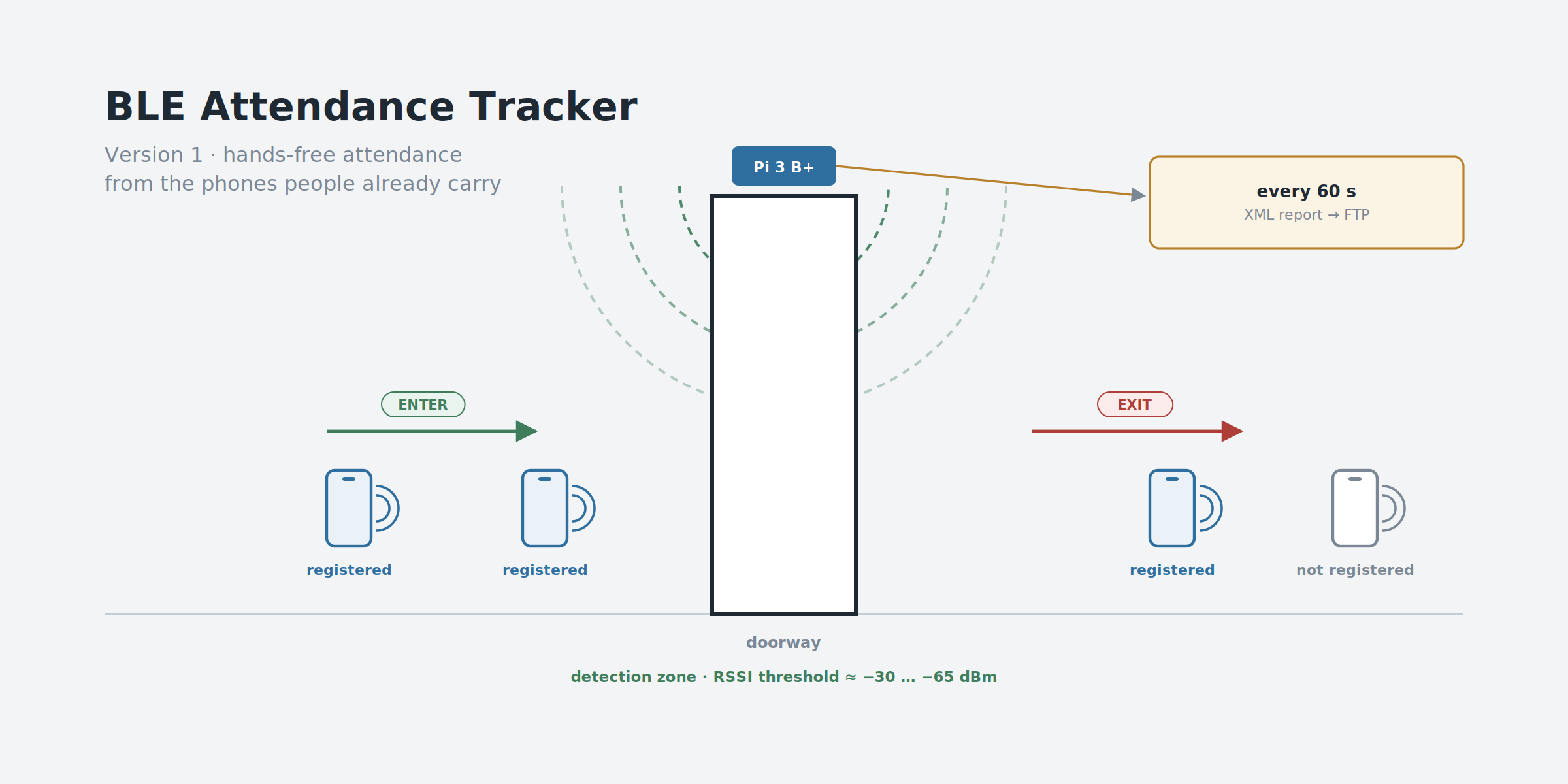
- Led a two-person BLE attendance tracker to working prototype, plus an ESP32-C3 smart-plug R&D build.
▶Full detail — what the role actually involved
Smart Greenhouse — Ministry of Agriculture
- Project lead. Five sites in operation since 2024.
- Designed the electrical control panels — component selection, wiring, UPS sizing — and the control path that arbitrates automatic versus manual at the power layer, because the commercial fertigation controller exposed no API.
- Co-developed the ESP32/FreeRTOS panel firmware, CO₂ and light sensor nodes on a custom binary protocol, a motorised shading net with a hardware interlock, and fleet-wide OTA updates.
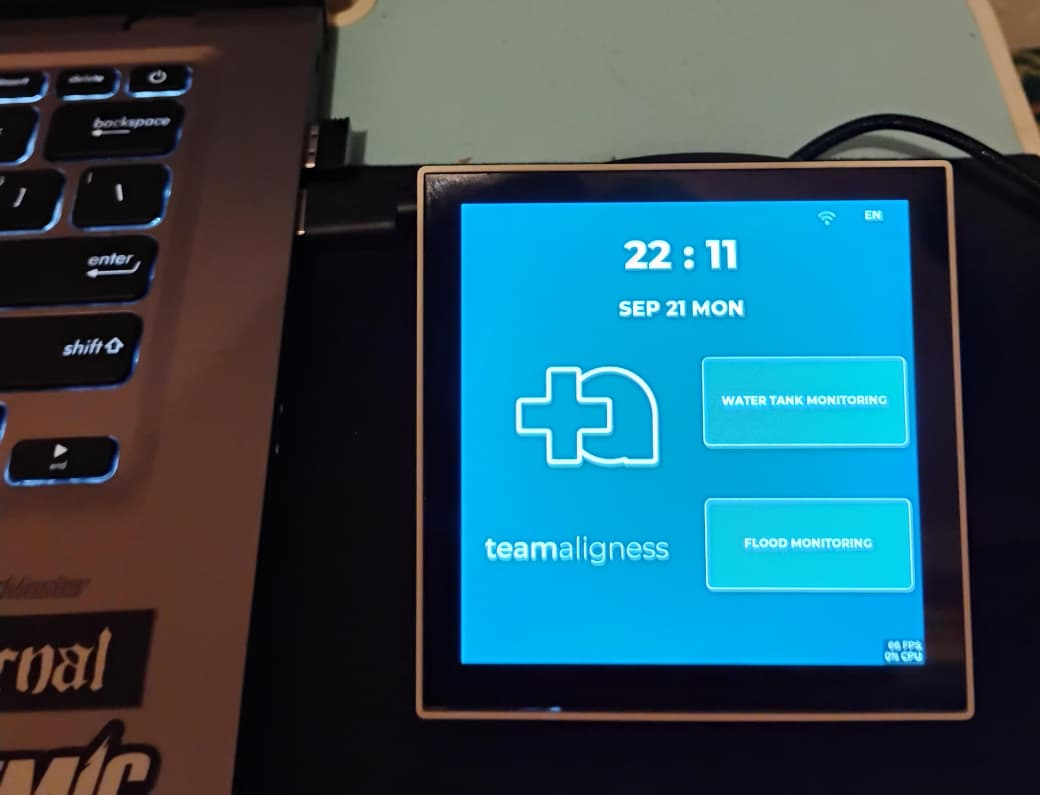
Flood & Water-Tank Monitoring
- System design and firmware. ESP32 nodes with ultrasonic and float sensors publish over MQTT.
- An ESP32-P4 wall panel (LVGL, TLS, C on ESP-IDF) decides and commands two tanks, four solenoid valves and the flood pump, which run unattended.
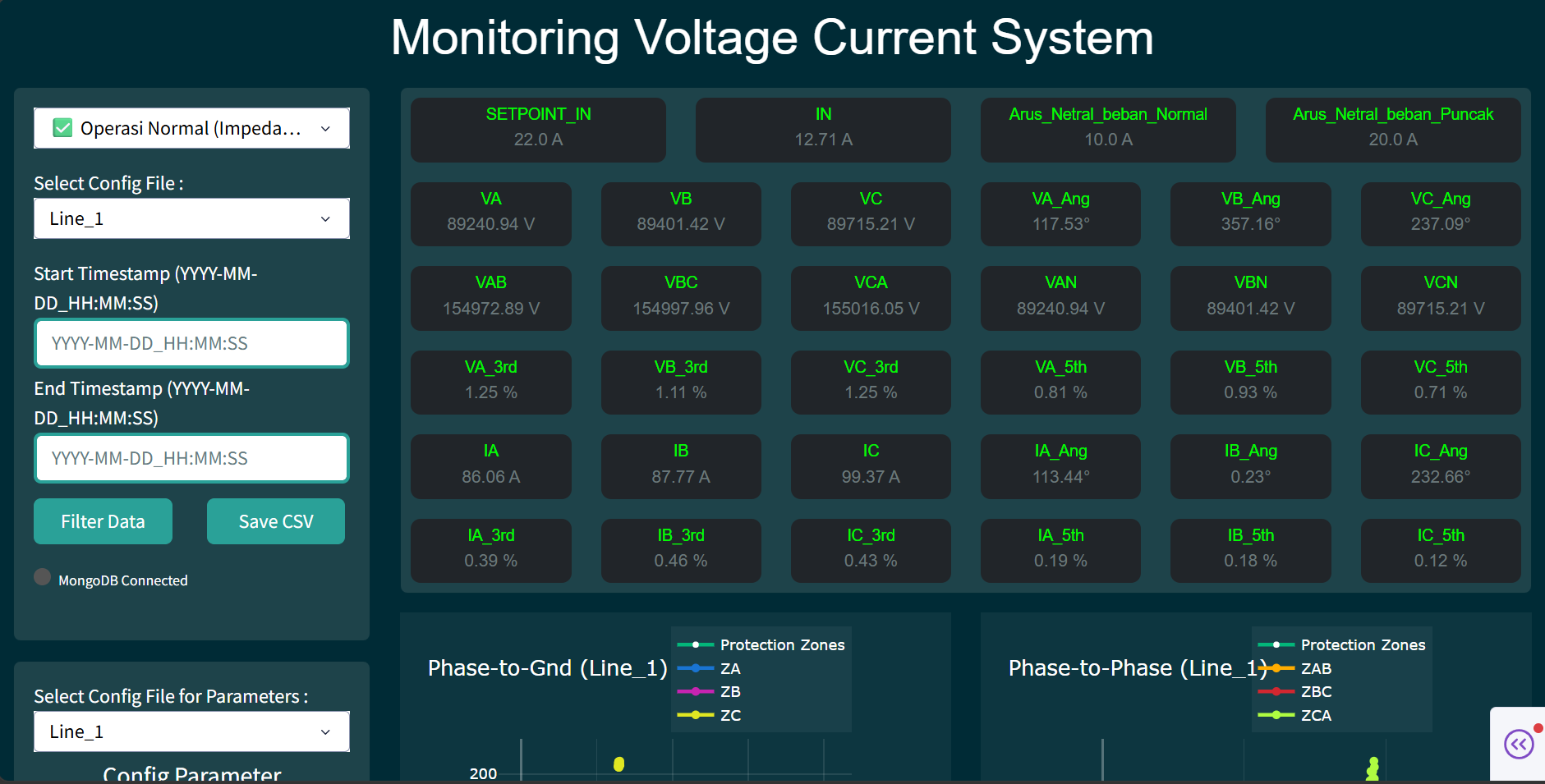
Industrial Voltage & Current Monitoring — power plant client
- System architect. MQTT ingestion from 16 power-sensor lines (64 data streams).
- Impedance calculated with residual compensation against distance-relay protection zones, stored in MongoDB, and plotted on a Dash dashboard with editable setpoints and alerts — inside a one-second end-to-end budget.
BLE Attendance Tracker — confidential client
- Project lead, team of two, delivered as a working prototype.
- Raspberry Pi scanner written from scratch in Python: identity from the iBeacon UUID rather than the randomised MAC address, enter/exit from an RSSI trend against a threshold, XML reports over FTP every 60 seconds.
WiFi Smart Plug — internal R&D
- ESP32-C3 firmware in C on ESP-IDF, SSR relay control, BL0937 power metering, TLS-secured MQTT, two-stage provisioning, and a custom 2-layer PCB.
2021
Jun 2021 – Nov 2022
FULL-TIME
CHAPTER 2 · BUILDING HARDWARE
PT Len Industri (Persero)
Embedded System Engineer
Embedded systems for the GCI (ground control intercept) IFF/SSR radar programme, in consortium with PT LAPI ITB, PT RTI and PT Infoglobal for Ministry of Defence R&D.
- Designed the Transmit/Receive module on an FPGA board (Vivado) and wrote its firmware in C using Vitis IDE.
- Designed the UDP communication between the TR modules and the beam controller, and the TR module PCB in Eagle.
▶Full detail — what the role actually involved
What the work involved
- Processed radar-captured data together with the data processing team.
- Wrote the project specification documentation for the module.
- Worked inside a defence R&D consortium, where the interfaces between four organisations mattered as much as the hardware.
2021
Apr 2021 – Jun 2021
FULL-TIME
CHAPTER 2 · BUILDING HARDWARE
Widya Robotics
Hardware Engineer
Hardware and software for a 3D Concrete Printing (3DCP) machine.
- Developed the machine across Arduino, Raspberry Pi, STM32 and LPC1768 boards.
- Modified Marlin firmware for the printer configuration and wrote a Python G-code generator.
▶Full detail — what the role actually involved
What the work involved
- Supported the STM32–LPC1768 communication in C/C++.
- Ran functional testing on both the electronics and the software side, and troubleshot faults across the 3DCP system.
2019
Jul 2019 – Sep 2019
INTERNSHIP
CHAPTER 1 · FIRST BOARDS
PT Lievee Ciptatama Indonesia
Internship Program — Hardware Engineer
Where the hardware habit started: a lift sub-system, built on Arduino, STM32 and Raspberry Pi.
- Developed a lift sub-system with relay control in C and Python.
- Designed and reviewed the PCBs in Eagle — alongside university robotics competitions in Indonesia and Tokyo.